Published : 2025-06-06
In Chinese culture, stone lions can both ward off evil spirits and signify status. Many traditional buildings have a pair of male and female stone lions at their gates to act as guardians.
However, as a foreign enterprise, why did HSBC place bronze lions at its entrance? What Hong Kong stories have these iconic lions witnessed?
The tradition of HSBC originated in Shanghai
Walking past HSBC's main building in Central, it's easy to be attracted by the pair of majestic bronze lions at the entrance. Standing guard over Hong Kong for nearly a century, one lion roars fiercely, exuding power, while the other rests calmly lying down, maintaining an air of authority.
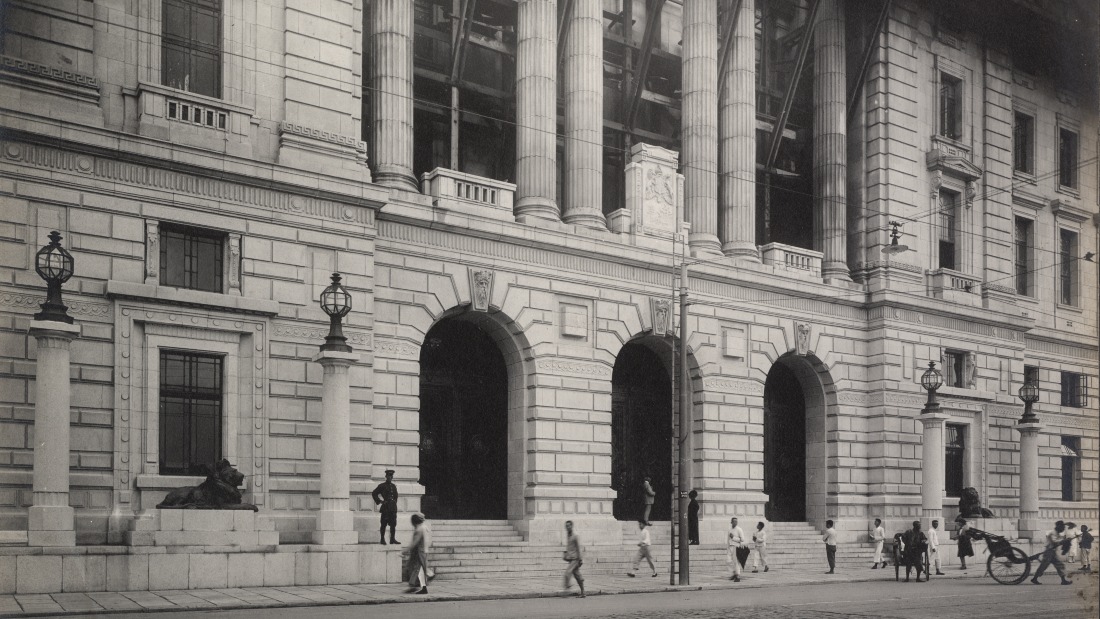
HSBC's tradition of placing bronze lions at the entrance did not start in Hong Kong. As early as 1923, the HSBC headquarters building in Shanghai Bund had bronze lions at its entrance.
Two HSBC bronze lions are both male and named Stephen and Stitt
According to HSBC's official website, the idea of placing lion statues was the suggestion of HSBC's General Manager, Alexander Stephen. The inspiration came from a pair of stone lions he saw outside the entrance of the arsenal in Venice.
Later, the London sculptor Henry Poole sent him a pair of personally designed bronze lions, which Stephen found very majestic. He then emulated the practice of the Venetian Arsenal and placed them in front of the HSBC building in Shanghai. The pair of bronze lions outside HSBC's main building in Hong Kong was also cast based on the pair in Shanghai.
Unlike the pair of male and female lion sculptures outside traditional Chinese architecture, the two bronze lions outside the HSBC headquarters building in Central, Hong Kong, are both male. The roaring one is named "Stephen" after the aforementioned HSBC General Manager Alexander Stephen, and the serene one is named "Stitt" to commemorate Shanghai Manager Gordon Stitt.
Read more: A secret passage to the sea in HSBC's basement?
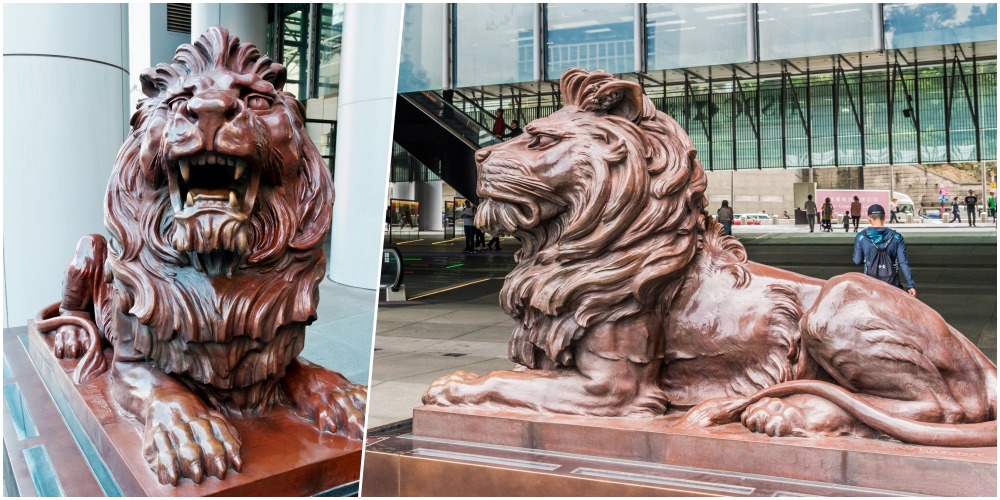
HSBC bronze lions have a role in warding off evil spirits
It is said that the placement of lions outside HSBC's headquarters in Hong Kong also has feng shui implications.
Since the third-generation HSBC headquarters was built in 1935 and located by the sea, the reflection of sunlight from the sea onto the building could bring negative energy. Therefore, placing bronze lions at the entrance has the effect of warding off evil spirits and protecting the bank.
Lions are considered auspicious creatures in the Chinese culture, believed to ward off evil and bestowing blessings. Therefore, many passers-by are attracted to the bronze lions, stopping to touch their paws and pray for wealth and good luck.
Read more: I.M. Pei's design of the Bank of China Tower competing with HSBC
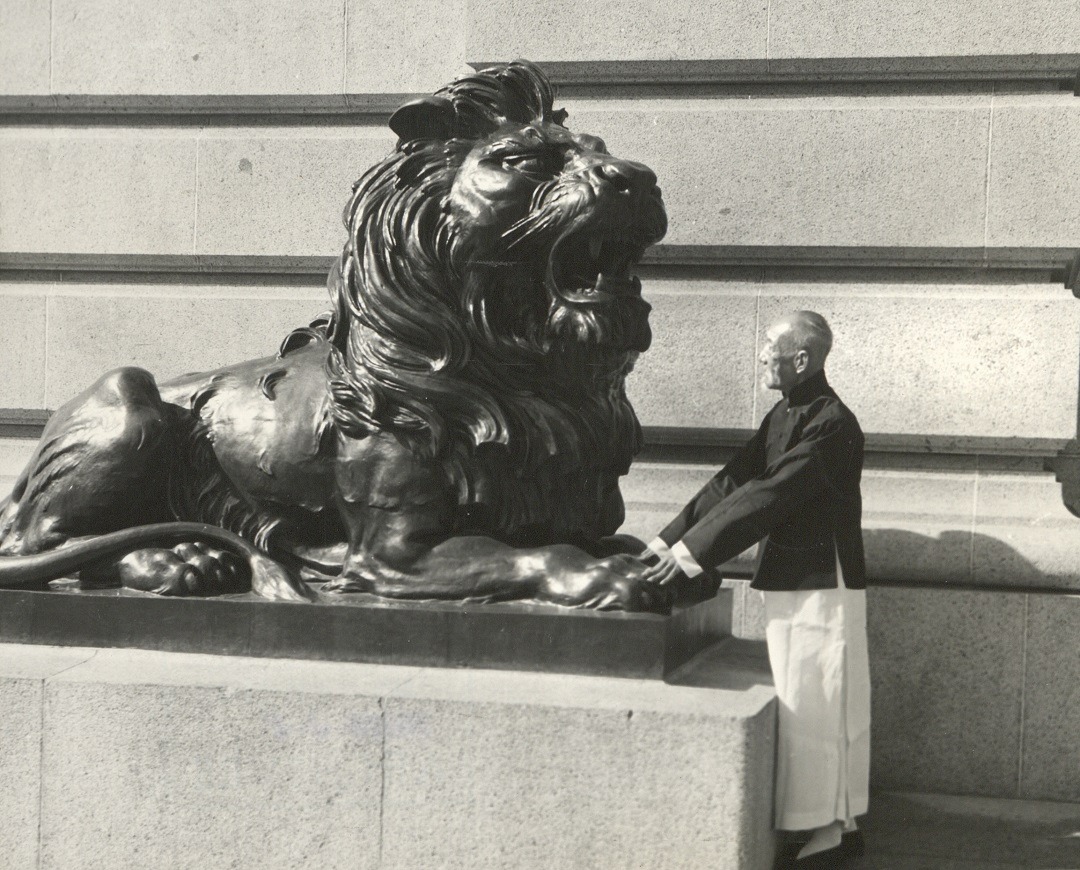
HSBC bronze lions were taken to Japan intended to be melted down for weapons
These bronze lions, which have stood in Hong Kong for 90 years, have witnessed the city's many ups and downs.
During the Japanese occupation, Hong Kong fell into darkness for three years and eight months. During this period, the two bronze lions were taken to Japan by the Japanese, intending to be melted down for weapons.
Other seized statues included the statue of Queen Victoria in Central and the statue of HSBC's chief manager, Thomas Jackson.
After the Japanese surrendered, the American military found these statues in a warehouse at a dock and, after much effort, they were returned to Hong Kong. Today, the pair of bronze lions still bear the scars from artillery fire during the defence battle of Hong Kong, serving as a reminder of history.
Read more: The "intimate relationship" between Statue Square and HSBC


Bank of China Building features traditional male and female stone lions
Across the street from the HSBC headquarters, the Bank of China Building (former headquarters) also has stone lions placed at its entrance. In front of the main entrance on Des Voeux Road Central, there is a pair of traditional Chinese male and female stone lions.
In traditional Chinese culture, stone lions are typically placed according to the principle of "male on the left, female on the right". The male lion with its front paw playing with a ball symbolises power, while the female lion with its paw resting on a cub represents fertility and the flourishing of descendants.
Read more: How to distinguish the gender of Stone Lions in front of gates?

The Western-style stone lions outside Bank of China Building was genderless
However, walking to the other end of the Bank of China Building (舊中銀大廈), you will find another Western-style stone lions placed at the entrance facing Admiralty.
According to the information, this pair of stone lions like the entire building, adopted an Art Deco design. Both lions on the left and right are identical and have no distinction of gender.
It is reported that the stone lions outside Bank of China Building were originally all genderless Western-style lions.
However, the management believed that the stone lions did not align with the traditional Chinese concept of Yin and Yang, and decided to replace the pair at the main entrance, using the design of male and female stone lions from Tiananmen Square in Beijing as reference.
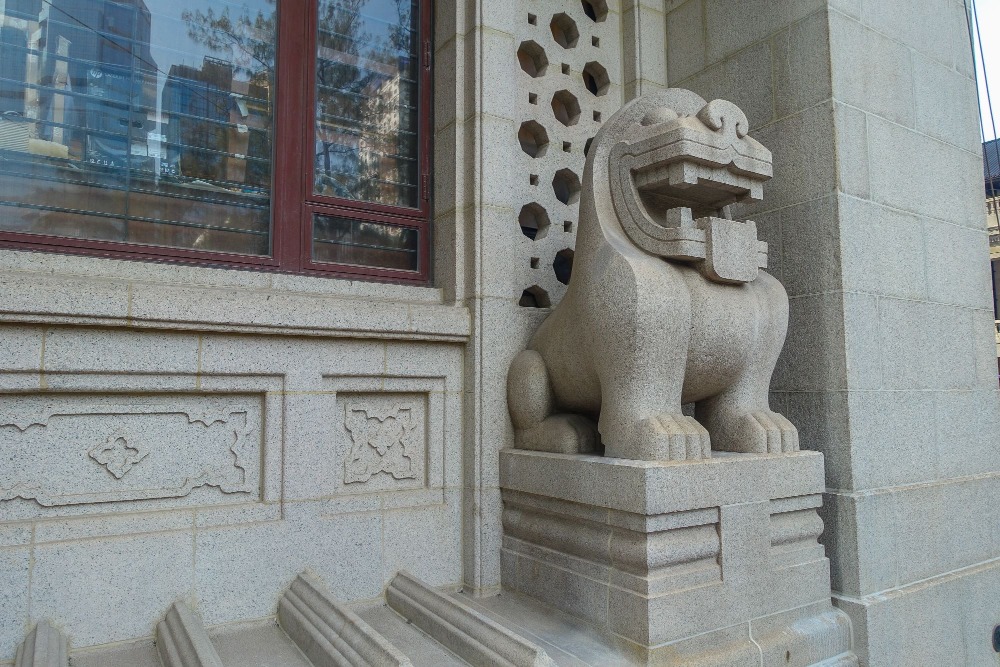
The removed Western-style stone lions were later donated to the University of Hong Kong and were subsequently placed around the Main Building, University Hall, and staff residence at High West Site. In recent years, due to the reconstruction of High West Site, the stone lions have been stored away waiting to be relocated.
Next time you pass by these buildings, you may want to take a look at the bullet marks on HSBC's Stephen and Stitt bronze lions, touch their paws for good luck, or you can try to distinguish the gender of the stone lions outside the Bank of China Building or other traditional Chinese buildings!